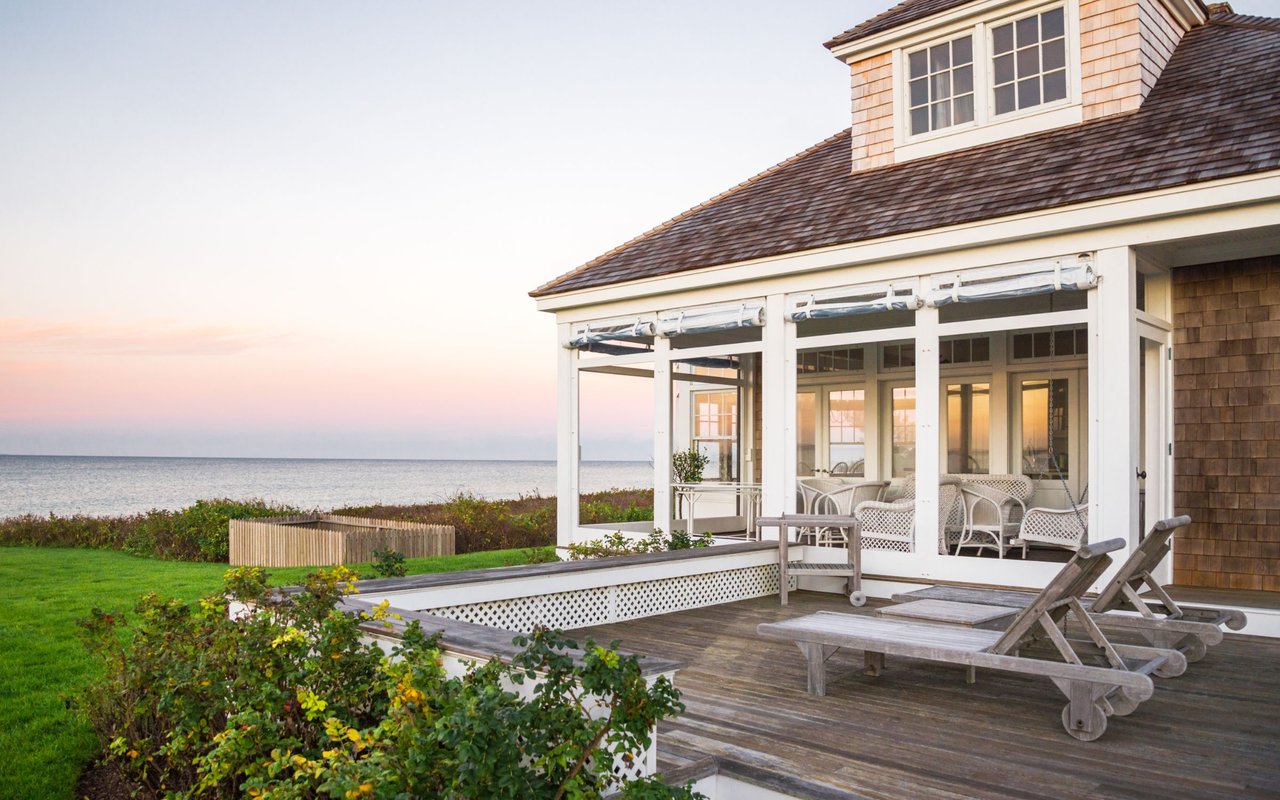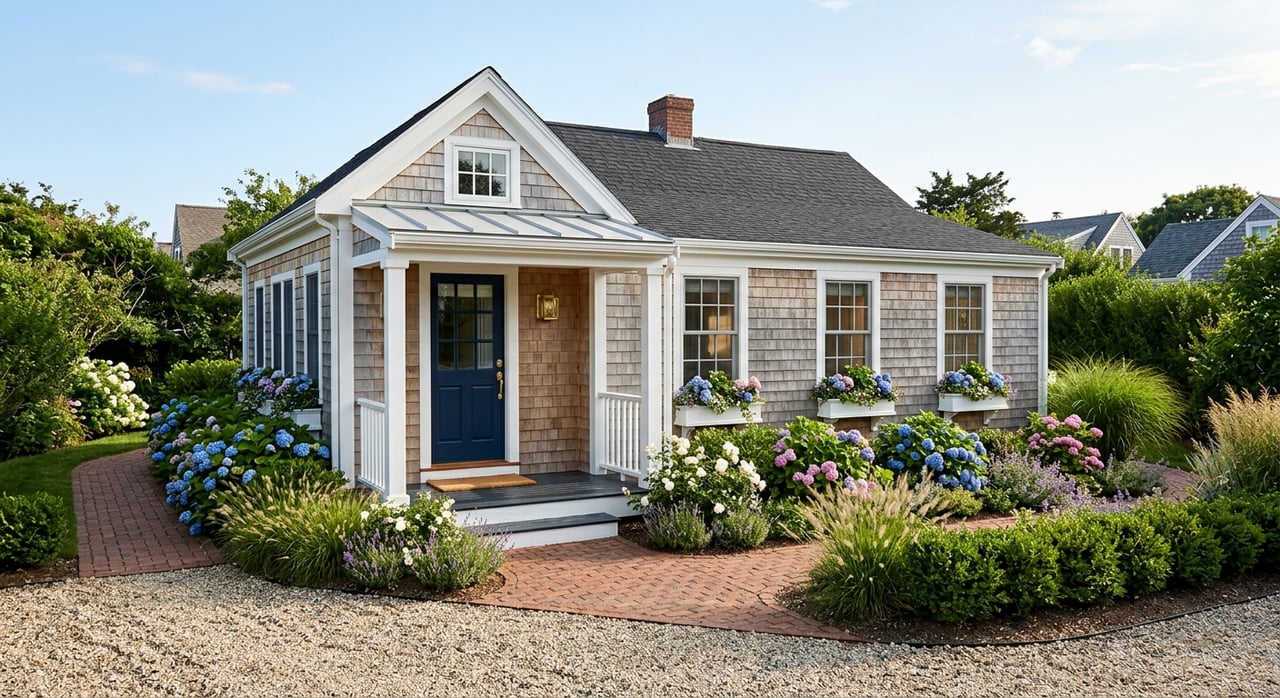
If you are deciding between a condo and a cottage in Provincetown, you are not alone. Many buyers come to town wanting the same thing: a place that fits their lifestyle, feels manageable, and makes sense financially in a fast-moving coastal market. The good news is that the better choice usually becomes clearer once you look past the label and focus on ownership, upkeep, taxes, and intended use. Let’s dive in.
Provincetown Market Basics
Provincetown remains a high-priced market, so your first decision should be about fit, not assumptions. In March 2026, Redfin reported a median sale price of $876,500, and homes averaged 16 days on market.
Inventory also shows that buyers have options in both categories. Reviewed search pages showed 51 condos for sale on Redfin and 28 single-family homes for sale on Zillow. Recent examples ranged from about $929,900 for a condo at 690 Commercial St Unit 1D to $2.95 million for a single-family home at 26 Cottage St.
That range matters because a condo is not always the cheaper path, and a cottage is not always out of reach. In Provincetown, the real question is often how you want to live, maintain, and use the property.
Condo Ownership in Provincetown
A condo in Massachusetts is more than just the unit itself. Under Chapter 183A, condo ownership includes your unit plus an undivided interest in common areas and facilities, with rights and responsibilities shaped by the master deed, deed, and bylaws.
In practical terms, that usually means shared maintenance and shared rules. Mass.gov notes that condo associations typically cover the building, common walls, and grounds, while unit owners need insurance for what the master policy does not cover.
A Provincetown listing at 690 Commercial St Unit 1D shows how this can look in real life. The listing notes a $400 monthly HOA fee, and the association maintains the structure, landscaping, snow removal, trash, common areas, and reserve funds. The unit also includes deeded parking, a private deck, and master insurance.
Cottage Ownership in Provincetown
Single-family cottages and houses usually work the opposite way. Instead of paying monthly HOA dues for shared services, you generally take on more direct responsibility for the property.
That often includes the exterior, grounds, systems, and many day-to-day maintenance choices. In exchange, you typically have more control over the site and fewer association rules to navigate.
The single-family listing at 26 Cottage St is a useful local example. It is identified as single-family residential, built in 1900, with no HOA dues, a fenced and enclosed yard, an outdoor shower, and two parking spaces.
Condos vs. Cottages: Key Differences
When buyers compare these two property types, the tradeoffs usually come down to maintenance, control, and how you plan to use the home. Here is a simple side-by-side view based on the Provincetown examples and Massachusetts condo guidance.
| Factor | Condo | Cottage or Single-Family Home |
|---|---|---|
| Ownership structure | Unit plus shared interest in common areas | Full property ownership of the home and site |
| Monthly fees | Often yes | Often no |
| Maintenance | Association often handles shared exterior items and common areas | Owner typically handles more directly |
| Control over property | More governed by documents and association rules | More direct control over site and exterior |
| Outdoor space | May be limited or shared | Often more private outdoor space |
| Parking | Varies by unit and deed | Varies by property |
For many second-home buyers, that condo structure feels simpler and more predictable. For buyers who want privacy, yard space, and control over the property, a cottage may feel more natural.
How Costs Compare
The carrying cost conversation in Provincetown goes beyond the purchase price. You also need to look at monthly fees, taxes, insurance needs, and planned use.
Provincetown’s FY2026 residential tax rate is $6.13 per $1,000 of assessed value. The town also adopted a 35% residential exemption for FY2026, with an exemption amount of $416,961.
The town’s own example shows how meaningful that can be. A $1,000,000 property would be taxed at $6,130 without the exemption and $3,574.03 with it.
That exemption can help owner-occupiers of either condos or cottages reduce carrying costs. Provincetown says eligibility is tied to domicile and year-round occupancy, and in some cases to year-round rental to a qualified resident.
If you are buying a seasonal or second home, do not assume you will qualify. This is one of those details that can change your real monthly cost more than the condo-versus-cottage label.
If You Plan to Rent the Property
In Provincetown, rental rules matter whether you buy a condo or a cottage. The town defines a short-term rental as 31 days or less.
According to the town, short-term rentals are subject to a 14.45% tax. That rises to 17.45% for certain professionally managed units. Operators also must register and maintain at least $1,000,000 in liability insurance.
There are also cases where the additional 3% community impact fee does not apply. The town says that fee does not apply to licensed businesses, owners renting a single unit, or some owner-primary-residence arrangements.
This is why intended use deserves a full review before you buy. A condo may look turnkey on paper, but association rules may affect rental use. A cottage may offer more privacy and flexibility, but it can also bring more direct operating responsibility.
Lifestyle Fit in Provincetown
Condos can be a strong match if you want a lower-hassle ownership experience. The 690 Commercial St Unit 1D listing was marketed as year-round and fully furnished, with bay views, a private deck, beach access, deeded parking, and rental history.
For some buyers, that is exactly the appeal. You may be looking for a lock-and-leave second home, a place that feels easier to manage from a distance, or a property that aligns with a more turnkey ownership style.
Cottages and single-family homes often stand out for privacy and outdoor living. The 26 Cottage St example highlights a large fenced yard, an outdoor shower, and two-car parking, which can be harder to find in denser condo settings.
If your vision includes more separation, more yard space, or more control over how the property feels and functions, a cottage may be the better fit. In Provincetown, those quality-of-life details can matter as much as the square footage.
Local Due Diligence Matters
Provincetown has local factors that deserve attention no matter which property type you choose. One of the biggest is the Historic District.
The town states that building work in the Historic District is regulated under Chapter 15 of the town’s General By-law, and the Historic District Commission must approve applications. That makes exterior changes, additions, and other visible alterations a key part of pre-purchase review.
Flood review also belongs early in your process. Provincetown maintains a local flood plain map with FEMA maps, and Massachusetts advises that flood insurance may be relevant depending on location.
For condo buyers, document review is critical. You should review the master deed, bylaws, monthly fee, reserve funds, what the association maintains, and whether rental rules fit your plans.
For cottage buyers, verify maintenance responsibility, flood zone, parking, utility setup, and whether planned work may need Historic District review. The 26 Cottage St listing also showed private sewer and public water, which is a useful reminder not to assume all homes have the same utility configuration.
Which Option Fits You Best?
If you want predictability, shared upkeep, and a more turnkey ownership style, a condo may be the better match. If you want more privacy, more outdoor space, and more direct control over the property, a cottage may feel like the right move.
In Provincetown, there is no one-size-fits-all answer. The better choice depends on how often you will use the property, whether you plan to rent it, how hands-on you want to be, and which carrying costs you are comfortable managing.
That is where local guidance can make the process much easier. If you want help comparing specific Provincetown condos and cottages through the lens of lifestyle, ownership costs, and long-term use, Amy E Vickers can help you sort through the details with a clear, practical approach.
FAQs
What is the main difference between a condo and a cottage in Provincetown?
- A condo usually includes shared ownership of common areas and often comes with monthly fees and shared maintenance, while a cottage or single-family home usually gives you more direct control and more direct responsibility for upkeep.
Are condos always less expensive than cottages in Provincetown?
- No. Reviewed listings showed a condo around $929,900 and a single-family home at $2.95 million, which illustrates that price depends on the specific property, not just the category.
How do Provincetown property taxes affect condo and cottage buyers?
- Provincetown’s FY2026 residential tax rate is $6.13 per $1,000 of assessed value, and some owner-occupiers may qualify for the residential exemption if they meet the town’s rules.
What should condo buyers review before buying in Provincetown?
- Condo buyers should review the master deed, bylaws, monthly fee, reserve funds, maintenance responsibilities, and any rental rules that may affect how they plan to use the property.
What should cottage buyers verify before buying in Provincetown?
- Cottage buyers should verify flood zone status, parking, utility setup, maintenance needs, and whether planned exterior work may require Historic District review.
Do short-term rental rules apply to both condos and cottages in Provincetown?
- Yes. Provincetown defines a short-term rental as 31 days or less, and the town requires registration, liability insurance, and payment of applicable short-term rental taxes.