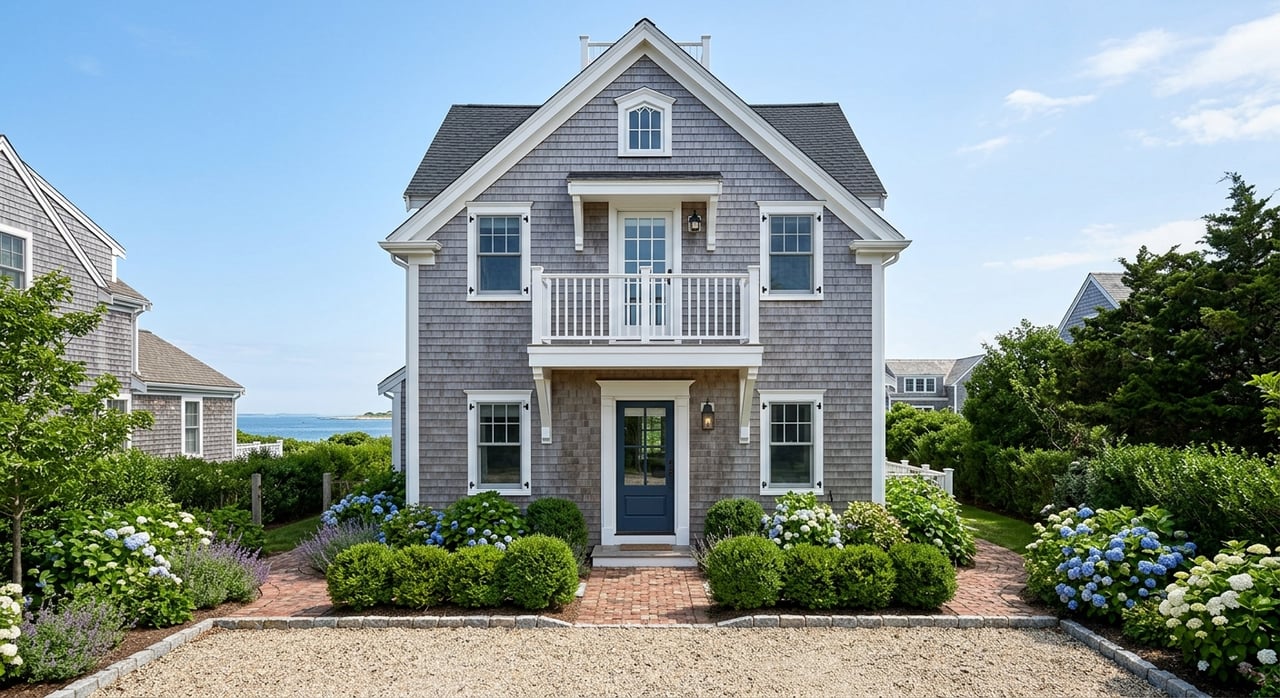
If you have been watching Barnstable and wondering whether this is the right time to invest, you are not alone. It is a market with steady pricing, limited inventory, and a strong seasonal economy, which can create opportunity if you understand where the pressure points really are. The good news is that today’s numbers tell a fairly clear story about pricing, property type, rental strategy, and local compliance. Let’s dive in.
Barnstable remains tight but not chaotic
Barnstable’s current market looks competitive, but it does not read like an all-out bidding frenzy. Public market data for March 2026 shows median sale prices in the low to mid $700,000s, with homes generally selling close to list price and days on market ranging from about 41 to 53 days depending on the source.
That matters if you are investing for both cash flow and eventual resale. Pricing has stayed resilient, yet buyers still have some room to negotiate in certain segments. In practical terms, well-priced properties can move, but not every listing is flying off the shelf in a weekend.
The broader trend is also important. Barnstable’s median home sales price was reported at $675,000 in 2024 and $715,000 in 2025, which supports the idea that values have continued to hold up. For investors, that points to a market where scarcity is still supporting price strength.
Limited supply shapes investor choices
Inventory is one of the biggest forces in Barnstable right now. Zillow reported 219 homes for sale at the end of March 2026, while Realtor.com reported 187 active homes, and the local story across sources is consistent: supply remains limited.
Low supply tends to keep pressure on pricing, especially in a place like Barnstable where the housing stock is not evenly distributed across property types. According to the local housing profile, about 27,656 housing units exist in town, and roughly 83% are single-family homes, 14% are multifamily, and 3% are other property types.
For you as an investor, that means the market is still heavily weighted toward detached homes. It also means that if you are looking for year-round rental inventory or lower-maintenance options, your choices may be narrower than the town’s overall size suggests.
Single-family homes still lead the market
If your strategy includes resale flexibility, single-family homes deserve close attention. Barnstable County data for March 2026 shows single-family homes with 2.1 months of inventory, 68 cumulative days on market until sale, and 95.9% of original list price received.
That is a useful signal because it shows a relatively tight and active segment. Single-family homes also make up the bulk of Barnstable’s housing stock, so they tend to offer the deepest buyer pool when it is time to sell.
This does not guarantee a better investment in every case, but it does support a practical takeaway. If you want the broadest resale appeal in Barnstable, single-family property is still the market’s core asset class.
Condos may offer a lower entry point
Condos can still make sense, especially if your goal is a lower price point, less exterior upkeep, or a simpler ownership model. County data shows condo inventory at 2.7 months, with 82 cumulative days on market and 95.3% of original list price received in March 2026.
Compared with single-family homes, that suggests condos generally move more slowly and may allow a bit more negotiating room. For some investors, that can be an advantage on the buy side.
The tradeoff is on the exit side. A condo may be easier to enter, but you should underwrite for a more measured resale timeline and a smaller margin for error on pricing and condition.
Barnstable’s rental story is shaped by seasonality
Cape Cod investing always comes back to seasonality, and Barnstable is no exception. County short-term rental occupancy rises sharply from 25.5% in January to 70.5% in July and 72.9% in August, with revenue per available rental also peaking in midsummer.
That seasonal concentration can create a strong gross-income window if your property is positioned for summer demand. At the same time, it also means your annual performance may rely heavily on a relatively short stretch of the calendar.
Barnstable is described as one of the less seasonal towns in the region, but it still shows a meaningful summer employment spike. That matters because local activity and visitor traffic help support demand patterns that are very different in July and August than they are in winter.
Why many owners favor short-term rentals
The economics behind seasonal leasing are easy to understand. A Cape Cod Commission analysis found that a 3-bedroom short-term rental in Barnstable County had a 2021 median average daily rate of $403, and the report stated that two months of short-term rental revenue could exceed a full year’s revenue from a year-round 3-bedroom rental at the county’s average monthly rent.
That does not mean short-term rentals always produce stronger net returns. You still need to account for vacancy, cleaning, turnover, management, excise taxes, maintenance, and the realities of a highly seasonal income stream.
Still, it helps explain why many owners on the Cape prefer seasonal or short-term use over a traditional year-round lease. If you are considering Barnstable as an investment market, this is one of the most important dynamics to model carefully.
Compliance should be part of your underwriting
In Barnstable, rental compliance is not a side issue. The town states that any property rented or offered for rent must register with the Barnstable Health Division under its rental registration rules.
If you plan to operate a short-term rental, there is another layer. Barnstable states that short-term rentals must also register with the Massachusetts Department of Revenue, and Massachusetts defines a short-term rental as a stay of 31 days or less.
Taxes matter here too. Barnstable states that qualifying short-term rentals are subject to a 5.7% state excise, a 6% town excise, and a 2.75% Cape Cod & Islands Water Protection Fund excise, for a combined 14.45%.
For you, the message is simple: do not underwrite from gross nightly rates alone. Registration requirements and local excise taxes need to be built into your acquisition math from day one.
Year-round rental supply is structurally tight
Barnstable’s housing profile adds another important layer for investors focused on long-term rentals. Of year-round occupied housing units, 76% are owner-occupied and 24% are renter-occupied, while about 19% of all housing units are seasonal, recreational, or occasional use.
That combination helps explain why year-round rental supply can feel constrained. A meaningful seasonal share removes some homes from the full-time housing pool, while the overall rental base remains relatively limited.
For an investor, that can support demand for year-round rentals, but it also highlights the need to compare strategies carefully. In Barnstable, the right choice often depends on whether you want steadier occupancy or a more seasonal revenue model with higher operational demands.
Property age can affect your budget
Barnstable’s housing stock is not especially new. About 75% of homes were built between 1950 and 1999, and only about 11% were built since 2000.
That does not make older homes a bad investment. In fact, older Cape housing can offer location advantages and strong buyer appeal, especially when condition has been addressed.
It does mean you should be realistic about capital needs. If you are evaluating a property for rental readiness or resale, repairs, updates, and maintenance planning may play a larger role here than in newer markets.
Village-level pricing matters in Barnstable
One of the biggest mistakes investors make is treating Barnstable like a single uniform market. The town includes multiple villages and submarkets, and pricing can vary meaningfully across them.
Recent listing data shows that Mid Cape had 180 listings at a median listing price of $762,450, Hyannis had 16 listings at $569,000, Hyannis Port had 18 listings at $799,900, and Wianno had 26 listings at $1.1 million. That spread is too wide to ignore.
If you are buying for appreciation, rental demand, or resale liquidity, village-level analysis matters more than a town-wide average. The best opportunity for you may not be in the highest-priced area or the lowest-priced one. It may be in the submarket where your entry price, operating plan, and exit strategy line up best.
What today’s Barnstable market means for investors
Right now, Barnstable looks like a market that rewards discipline more than speculation. Inventory is limited, pricing is holding, and single-family homes remain the strongest and deepest segment for resale.
At the same time, condos may create a more accessible entry point, and short-term rental strategies can offer strong summer gross revenue if you account for softer off-season performance and higher compliance overhead. The best investment decisions here come from local, property-specific analysis, not broad assumptions about Cape Cod.
If you want help comparing neighborhoods, narrowing your buy box, or preparing a property for rental readiness or resale, Amy E Vickers offers a concierge-level approach designed for local buyers, second-home owners, and absentee investors across Cape Cod.
FAQs
What does the current Barnstable market mean for real estate investors?
- It means you are looking at a market with limited inventory, resilient pricing, and different opportunities depending on whether you want single-family resale appeal, condo entry pricing, or seasonal rental income.
Are single-family homes or condos a better investment in Barnstable?
- Single-family homes appear to be the tighter, faster-moving segment, while condos may offer a lower entry point but typically move more slowly and with a bit more room for negotiation.
Is Barnstable a strong market for short-term rentals?
- Barnstable can be attractive for short-term rentals because summer occupancy and revenue peak sharply, but your results will depend on seasonality, operating costs, and compliance requirements.
What taxes apply to short-term rentals in Barnstable?
- Barnstable states that qualifying short-term rentals are subject to a combined 14.45% excise, made up of a 5.7% state excise, 6% town excise, and 2.75% Cape Cod & Islands Water Protection Fund excise.
Do rental properties need to be registered in Barnstable?
- Yes. The town states that any property rented or offered for rent must register with the Barnstable Health Division, and short-term rentals must also register with the Massachusetts Department of Revenue.
Why is year-round rental supply tight in Barnstable?
- The local housing mix includes a meaningful seasonal share of homes, and only about 24% of year-round occupied units are renter-occupied, which helps keep the year-round rental pool relatively limited.